If you've started researching how to feed your baby solid food, you've almost certainly come across baby-led weaning (BLW). It's one of the most popular approaches to starting solids — and also one of the most confusing for new parents, especially when it comes to safety. This complete guide explains what baby-led weaning is, how it compares to spoon-feeding purees, whether it's safe, when to start, the best first foods, and exactly how to do it with confidence.
This article is for general information and is not a substitute for advice from your pediatrician. Talk to your child's doctor before starting solids, especially if your baby was premature or has any medical or developmental concerns.
What is baby-led weaning?
Baby-led weaning is an approach to introducing solid foods where your baby feeds themselves from the very start — usually with appropriately prepared finger foods — instead of being spoon-fed purees by an adult. The "weaning" here doesn't mean stopping breastfeeding; in the UK, "weaning" simply means introducing solids alongside breast milk or formula.
In practice, BLW means you offer soft, graspable pieces of family food and let your baby explore, pick them up, and bring them to their mouth at their own pace. You set the menu and keep them safe; your baby decides what and how much to eat.
Baby-led weaning vs. traditional spoon-feeding
There's no single "right" way to start solids — both methods can raise a healthy eater. Here's how they compare:
| - | Baby-led weaning | Spoon-feeding purees |
|---|---|---|
| Who feeds | Baby self-feeds | Adult feeds baby |
| First textures | Soft finger foods | Smooth then lumpy purees |
| Pace | Baby controls intake | Adult often controls pace |
| Mess | High (it's part of learning) | Lower |
| Family meals | Eats similar foods together | Often separate baby food |
Many families use a combination approach — offering some finger foods and some spoonfuls of purées or thicker mashes. This is perfectly fine and often the most practical choice.
Benefits of baby-led weaning
Research and parent experience suggest several potential benefits of BLW:
-
Develops motor skills. Grasping, pinching, and self-feeding build hand-eye coordination and the pincer grasp.
-
Encourages self-regulation. Because the baby controls how much they eat, BLW may support a healthy response to hunger and fullness.
-
Exposure to varied textures and flavors early on, which may help with accepting a wider range of foods later.
-
Easier family meals. Your baby eats versions of what you eat, so there's less separate cooking.
-
Engagement and independence. Many babies love the autonomy and stay interested in eating.
It's worth noting the evidence is still developing, and claims like "BLW prevents obesity" aren't firmly proven. The biggest, most reliable benefit is a confident, engaged eater who joins family meals.
Is baby-led weaning safe? (Choking concerns)
This is the number-one worry for parents — and a fair one. The reassuring news: good-quality studies have not found that baby-led weaning leads to more choking than spoon-feeding, provided foods are prepared safely and your baby is developmentally ready. The key is preparation and supervision.
Gagging vs. choking — know the difference
Understanding this difference will save you a lot of panic: -
Gagging is normal, common, and protective. It's a loud, sometimes dramatic reflex that pushes food forward — your baby may cough, go red, make noise, and bring food back up. The gag reflex is more sensitive in babies and helps them learn. A gagging baby is handling it.
-
Choking is silent and dangerous. The airway is blocked, so the baby can't cough, cry, or make noise; their face may turn blue. Choking needs immediate action.
Because gagging is common in BLW, every caregiver should learn infant first aid and how to respond to choking before starting solids. Always stay within arm's reach during meals.
Safety rules that prevent choking -
Baby always sits upright in a high chair — never reclined, never eating in a car seat or while crawling.
-
Never leave your baby alone with food, even for a moment.
-
No distractions — no eating while walking, playing, or in a moving stroller.
-
Avoid high-risk choking foods (see below) and prepare every food in a safe size and texture.
-
One adult, full attention. Don't multitask during meals at first.
When is your baby ready to start solids?
Most babies are ready around 6 months, and BLW specifically requires that your baby can sit and self-feed. Look for all of these signs of readiness: -
Can sit up well with little or no support and hold their head steady.
-
Has lost the tongue-thrust reflex (no longer automatically pushes food out).
-
Can bring objects to their mouth and is starting to grasp.
-
Shows interest in food — watching you eat, reaching for it.
Age alone isn't enough — wait for the developmental signs. Starting before about 6 months isn't recommended, and for BLW the sitting and grasping skills are essential for safety. Until then, breast milk or formula remains your baby's main nutrition.
How to start baby-led weaning, step by step
- Pick a calm, unhurried time when your baby is alert and not overly hungry or tired (a slightly hungry baby may get frustrated).
- Sit them upright in a high chair, ideally at the family table.
- Offer 1–3 pieces of soft finger food directly on the tray — start small to avoid overwhelm.
- Let them explore. Squishing, dropping, and mouthing food is learning, not wasting. Don't rush or put food in their mouth.
- Eat together when you can — babies learn by copying.
- Keep offering milk. For the first months of solids, breast milk or formula is still their main source of nutrition; solids are "tasting and practicing."
- Expect mess and go slowly — build up variety and amount over weeks.
Best first foods for baby-led weaning
Great BLW first foods are soft enough to squash between your finger and thumb and cut so your baby can grip them — for young babies, think finger-length sticks they can hold with some sticking out of their fist.
Good starter options:
-
Steamed vegetables: broccoli and cauliflower florets (with a stalk to hold), soft carrot, sweet potato, or zucchini sticks.
-
Soft fruit: ripe banana (leave part of the peel for grip), soft pear, avocado spears, steamed apple.
-
Iron-rich foods (important — see below): soft strips of well-cooked meat, flaked fish (bones removed), well-cooked lentils or beans (as patties), iron-fortified options.
-
Other: strips of toast or omelet, soft-cooked pasta, full-fat plain yogurt (with a pre-loaded spoon).
Don't forget iron
Around 6 months, your baby's iron stores start to run low, so iron-rich foods matter from the start. Offer iron sources at meals — meat, fish, beans, lentils, eggs, and iron-fortified foods — alongside vitamin-C-rich fruits and veg, which help iron absorption.
Foods to avoid
Some foods are unsafe for babies due to choking risk or health reasons: -
Choking hazards: whole nuts, whole grapes and cherry tomatoes (always quarter lengthwise), hard raw vegetables (raw carrot, apple), popcorn, hard candy, large chunks of meat, sausages/hot dogs in rounds, sticky globs of nut butter.
-
Honey — never before 12 months (risk of infant botulism).
-
Added salt — babies' kidneys can't handle it; don't add salt and avoid salty foods (processed meats, stock cubes, salty cheeses).
-
Added sugar and sugary drinks.
-
Whole cow's milk as a main drink before 12 months (small amounts in cooking are fine).
-
Low-fat foods — babies need the fat; choose full-fat dairy.
How to prepare foods safely
The same food can be safe or unsafe depending on how you prepare it: -
Grapes, cherry tomatoes, large berries: quarter lengthwise.
-
Hard fruits/veg (apple, carrot): steam or roast until soft, or grate.
-
Round foods (sausage, hot dog): avoid coin shapes; cut into long thin strips (better to avoid these foods entirely while young).
-
Nut butters: spread thinly, never in spoonfuls.
-
Meat: offer soft, shreddable strips or finely minced into patties.
-
Always test softness by squashing between your fingers.
Introducing allergens
Current guidance encourages introducing common allergens early and one at a time (from around 6 months), rather than delaying them. These include peanut (as thin smooth peanut butter or peanut puff, never whole nuts), egg (well cooked), dairy, wheat, soy, fish, and shellfish. -
Introduce one new allergen at a time, at home, earlier in the day, so you can watch for a reaction.
-
Once tolerated, keep it in the diet regularly.
-
If your baby has severe eczema or a known food allergy, talk to your pediatrician first about how and when to introduce allergens.
Common concerns, answered
"Is my baby actually eating enough?" In the early weeks, very little food makes it in — and that's normal. Milk still covers their nutrition. Intake increases gradually over months.
"They gag a lot — is that bad?" Gagging is normal and protective (see above). It usually decreases as your baby gets more practice.
"It's so messy!" Mess is part of learning. A splat mat under the chair and a long-sleeved bib save your sanity.
"Can I mix BLW with purees?" Yes. A combination of finger foods and spoon-fed mashes is common and completely fine.
Tips for success -
Stay relaxed — your calm helps your baby feel safe to explore.
-
Offer foods multiple times — it can take 10+ exposures before a baby accepts a new food.
-
Eat together and model enjoying food.
-
Don't pressure or play "one more bite" games — let your baby lead.
-
Keep meals short and positive; end before frustration.
When to talk to your pediatrician
Reach out if: -
your baby isn't showing readiness signs by around 6–7 months;
-
you're worried about poor weight gain or very low intake over time;
-
your baby has frequent, scary choking episodes (not gagging);
-
there's a family history of food allergies or your baby has severe eczema;
-
you have any concern about iron or overall nutrition.
How Momzy helps you start solids with confidence
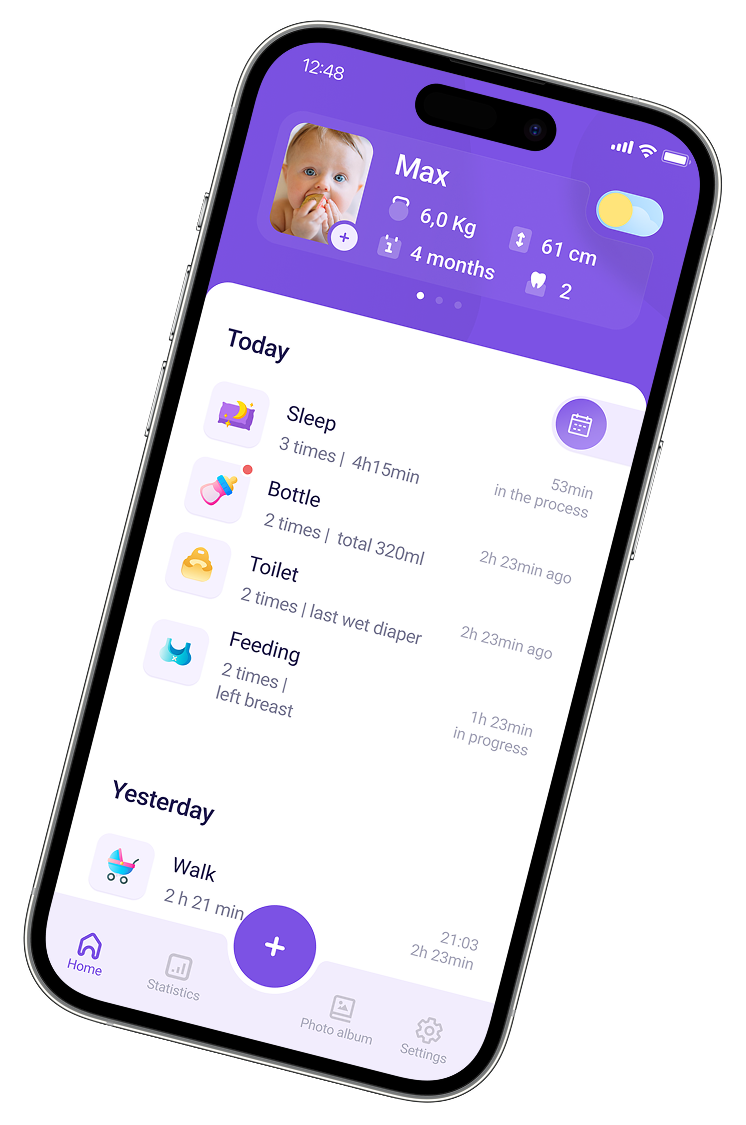
Starting solids brings a lot to keep track of — which foods you've introduced, which allergens your baby has tried, and how they reacted. With Momzy, you can log meals and new foods, note reactions to allergens, and follow your baby's growth on charts with WHO references — all in one place you can show your pediatrician. Shared family access means your partner, grandparents, or nanny stay on the same page about what's been introduced.
Download Momzy free on the App Store, Google Play, or AppGallery and make the solids journey calmer and more organized.
Key takeaways -
Baby-led weaning lets your baby self-feed soft finger foods from the start of solids, usually around 6 months.
-
It's as safe as spoon-feeding when foods are prepared properly and your baby is developmentally ready.
-
Learn the difference between gagging (normal) and choking (silent, dangerous) and take an infant first-aid course.
-
Prioritize iron-rich foods, introduce allergens early and one at a time, and avoid choking hazards, honey, and added salt and sugar.
-
Combining BLW with purees is perfectly fine — do what works for your family.