If you've ever Googled "foods that increase milk supply" at 3 a.m. while nursing, you're not alone. Many breastfeeding parents worry about making enough milk, and food feels like something you can actually control. The good news: a nourishing diet absolutely supports healthy lactation. The honest news: no single food works like magic. Let's separate the evidence from the folklore so you know which lactation foods are worth your grocery money — and what actually drives milk production.
This article is for general information and is not a substitute for advice from your doctor, pediatrician, or a lactation consultant.
First, how milk supply really works
Breast milk production runs on supply and demand. The more often and effectively milk is removed from the breast — by your baby or a pump — the more your body makes. Frequent, complete emptying tells your body to produce more; long gaps tell it to slow down.
This is the single most important thing to understand: milk removal, not food, is the main driver of supply. Foods and fluids support the system, but they can't replace regular, effective feeding. Keep that in mind as we talk about lactation foods — they help your overall nutrition and energy, which matters, but they sit on top of good breastfeeding management.
Do lactation foods actually work?
Foods and herbs thought to boost milk are called galactagogues. Here's the balanced truth: high-quality scientific evidence for most food galactagogues is limited, and results are mixed. Many have been used for generations and are perfectly safe to enjoy, but you should think of them as supportive, not as a cure for a true supply problem.
Where food genuinely helps:
- Calories and nutrients. Making milk takes energy — roughly 300–500 extra calories a day. Under-eating can affect your energy and, over time, supply.
- Hydration. Milk is mostly water. You don't need to force liters, but drink to thirst and keep water nearby when you nurse.
- Steady blood sugar. Balanced meals help you feel less exhausted, which makes the whole demand-and-supply cycle easier to keep up.
Foods that may help increase milk supply
Here are well-known lactation foods that are nutritious, safe, and commonly recommended. Build them into balanced meals rather than eating any one in huge amounts.
1. Oats and whole grains
Oatmeal is the classic lactation food. It's rich in iron and fiber, and many parents report it helps. Even if the effect is partly anecdotal, a warm bowl of oats is a nourishing, blood-sugar-friendly breakfast.
2. Leafy green vegetables
Spinach, kale, and other greens deliver iron, calcium, folate, and phytoestrogens. They're nutrient-dense and a smart staple while breastfeeding.
3. Legumes and beans
Chickpeas, lentils, and beans are excellent plant protein, fiber, and iron — great for steady energy and a traditional galactagogue in many cuisines.
4. Nuts and seeds
Almonds, walnuts, flaxseed, and chia provide healthy fats, protein, and minerals. A handful makes an easy one-handed snack during feeds.
5. Fennel and fenugreek
Fennel and fenugreek are the most famous herbal galactagogues. Fennel seeds are fine as food/tea. Fenugreek (as a supplement) has more evidence but also possible side effects and interactions — talk to your doctor before taking it, especially if you have diabetes or take medication.
6. Garlic
Garlic adds flavor and may make milk more appealing to some babies. It's a healthy addition to meals — no need to overdo it.
7. Salmon and omega-3 rich fish
Salmon and other low-mercury fish provide protein and DHA, an omega-3 important for your baby's brain development and your own recovery. Aim for 2–3 servings of low-mercury fish per week.
Honorable mentions: brewer's yeast (a common ingredient in lactation cookies), apricots, sweet potatoes, and plenty of water.
What about lactation cookies, teas, and supplements?
Lactation cookies, teas, and capsules are everywhere. Many combine oats, brewer's yeast, flaxseed, and fenugreek. They're generally fine as a treat or a hydration habit, but:
-
They are not regulated like medicine, and quality varies.
-
The "boost" often comes from the routine — sitting down, hydrating, and relaxing — as much as the ingredients.
-
Herbal supplements (especially fenugreek) can interact with medications and conditions. Check with a professional first.
Beyond food: what actually boosts supply
If your goal is genuinely more milk, these matter more than any single food: -
Feed or pump often and effectively — aim for frequent sessions and a deep, comfortable latch so the breast empties well.
-
Don't skip feeds — long gaps signal your body to make less.
-
Check the latch — a poor latch means the breast isn't drained, which lowers supply. A lactation consultant can help.
-
Rest when you can — exhaustion and high stress can work against you.
-
Eat enough and drink to thirst — fuel the system you're asking to work hard.
When to talk to a professional
A nourishing plate helps, but some situations need expert eyes. Reach out to your pediatrician or a lactation consultant if: -
your baby has fewer than 6 wet diapers a day or isn't gaining weight well;
-
your baby seems hungry after most feeds or feeds are very long and frustrating;
-
you have pain, or you suspect a latch or tongue-tie issue;
-
you've tried frequent feeding and foods and still feel your supply is low.
Many "low supply" worries turn out to be normal newborn behavior — but it's always worth checking the objective signs (wet diapers and weight gain) rather than guessing.
How Momzy helps you track what really matters
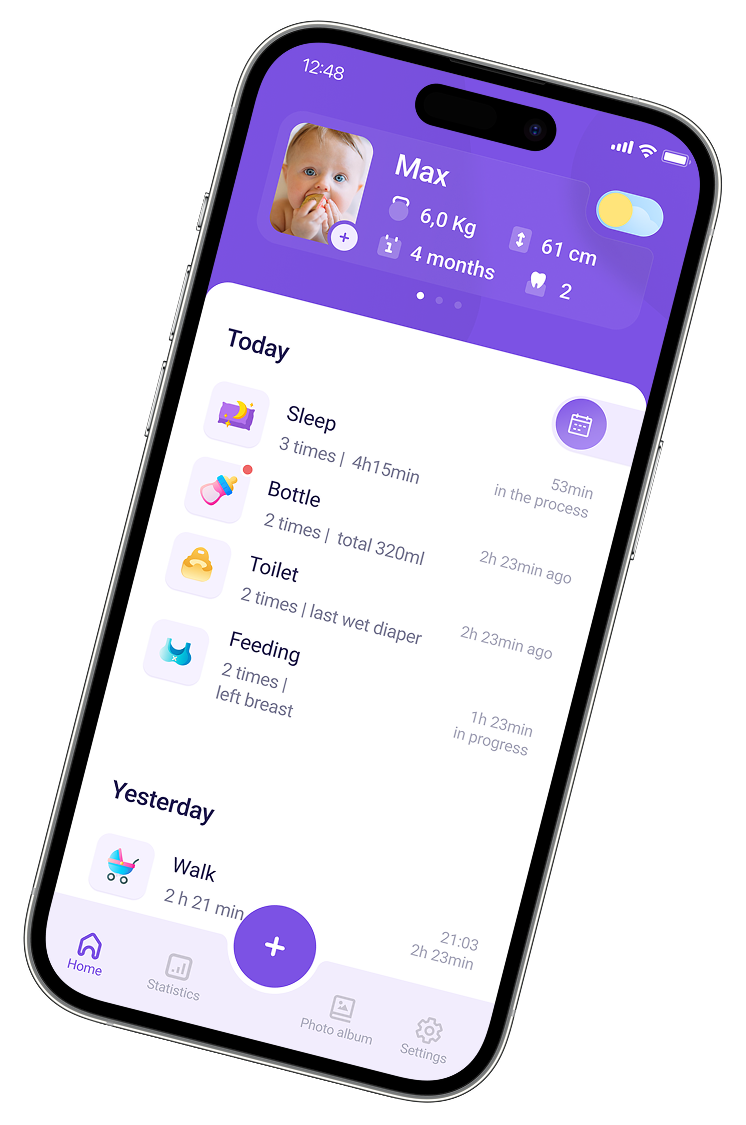
Since milk supply is about demand, the most useful thing you can do is track it. With Momzy, you can log feedings and how often your baby nurses, count wet and dirty diapers, follow weight on growth charts with WHO references, and spot patterns over a few days. That clear picture tells you — and your pediatrician — whether supply is truly low or your baby is simply doing fine. Shared family access keeps your partner and helpers in the loop too.
Download Momzy free on the App Store, Google Play, or AppGallery and feed with confidence, backed by real data.
Key takeaways -
Milk removal — not food — is the main driver of supply. Feed often and effectively.
-
Lactation foods (oats, greens, legumes, nuts, fennel, salmon) support nutrition and energy; evidence is supportive, not magical.
-
Be cautious with fenugreek and herbal supplements — check with a professional.
-
Watch objective signs (wet diapers, weight gain) and get help early if they're off.