Deciding on the first foods for baby is one of the most exciting (and slightly nerve-racking) milestones of the first year. Suddenly you're wondering: What should I offer first? Do I have to start with rice cereal? What's actually safe and healthy? This guide gives you a clear, evidence-based list of the best first foods for baby, how to prepare them, what to avoid, and how to introduce them with confidence.
This article is for general information and is not a substitute for advice from your pediatrician. Talk to your child's doctor before starting solids, especially if your baby was premature or has any health concerns.
When is your baby ready for first foods?
Most babies are ready to start solids around 6 months, when they show these signs:
-
Can sit up with little or no support and hold their head steady.
-
Has lost the tongue-thrust reflex (no longer pushes food out automatically).
-
Can bring objects to their mouth.
-
Shows interest in food — watching and reaching for what you eat.
Age alone isn't enough — wait for the developmental signs. Until then, breast milk or formula is all your baby needs.
How to introduce first foods
A few simple rules make starting solids smoother and safer: -
One new food at a time, then wait 2–3 days before the next. This helps you spot any reaction.
-
Start small — a teaspoon or two. Early on, solids are for tasting and practicing; milk is still the main nutrition.
-
Smooth, soft textures first, then gradually thicker and lumpier, or soft finger foods if you're doing baby-led weaning.
-
No added salt or sugar — let your baby taste real food.
-
Always supervise, with baby sitting upright, and learn the difference between gagging (normal) and choking (silent, dangerous).
There's no rule that you must start with rice cereal. Vegetables, fruit, and iron-rich foods are all great first choices.
Best first foods for baby
Here are excellent, nutritious first foods, grouped by category. Offer a variety over the first weeks.
Iron-rich foods (start here)
Around 6 months, your baby's iron stores begin to run low, so iron-rich foods are a top priority from the start: -
Pureed or soft-cooked meat (beef, chicken, turkey)
-
Well-cooked egg (fully cooked)
-
Lentils and beans, mashed
-
Iron-fortified infant cereal (oat, barley, multigrain)
-
Flaked fish (low-mercury, bones removed)
Pair iron with vitamin-C-rich foods (like fruit or bell pepper) to boost absorption.
Vegetables -
Sweet potato — steamed and mashed; naturally sweet and rich in vitamin A.
-
Carrot — cooked until soft, mashed or as soft sticks.
-
Butternut squash / pumpkin — smooth and easy to love.
-
Broccoli and cauliflower — steamed soft (great for self-feeding).
-
Peas and green beans — mashed or soft.
Fruits -
Avocado — creamy, full of healthy fats, no cooking needed.
-
Banana — mashed; perfectly portable.
-
Apple and pear — steamed and pureed (raw is a choking hazard).
-
Prunes — helpful if your baby gets constipated with solids.
Grains -
Iron-fortified baby cereal mixed with breast milk or formula.
-
Oatmeal — smooth and filling.
-
Soft, well-cooked pasta or rice as baby progresses.
Dairy and protein -
Full-fat plain yogurt — a great early dairy (no honey or added sugar).
-
Smooth, thinned nut butter (never spoonfuls or whole nuts).
-
Soft tofu.
Note: whole cow's milk shouldn't be the main drink before 12 months, but small amounts in cooking or full-fat yogurt are fine.
How to prepare first foods safely
\
| Food | How to prepare |
|---|---|
| Sweet potato, carrot, squash | Steam/roast until soft, then mash or puree |
| Apple, pear | Cook until soft (raw is a choking risk) |
| Avocado, banana | Mash ripe; offer as is |
| Meat, fish | Cook well, puree or finely shred; remove bones |
| Egg | Cook fully (no runny yolk) |
| Grapes, cherry tomatoes | Always quarter lengthwise |
| \ | |
| \ | |
| Always test softness by squashing food between your fingers — it should mash easily. | |
| \ | |
| \ | |
| Introducing allergens early | |
| \ | |
| \ | |
| Current guidance encourages introducing common allergens early (from around 6 months) and one at a time, rather than delaying: |
-
Peanut (smooth thin peanut butter or peanut puff — never whole nuts)
-
Egg (well cooked)
-
Dairy, wheat, soy, fish, shellfish
Offer a new allergen at home, earlier in the day, so you can watch for a reaction. Once tolerated, keep it in the diet regularly. If your baby has severe eczema or a known allergy, talk to your pediatrician first.
Foods to avoid in the first year -
Honey — never before 12 months (botulism risk).
-
Added salt and sugar, and sugary drinks.
-
Choking hazards — whole nuts, whole grapes, popcorn, hard raw fruit/veg, chunks of meat, sticky globs of nut butter.
-
Whole cow's milk as a main drink before 12 months.
-
Unpasteurized foods and low-fat products (babies need the fat).
How much and how often?
Start with once a day, a teaspoon or two, and build up gradually to 2–3 "meals" a day over the following weeks as your baby shows interest. Let your baby's appetite lead — never force the last spoonful. Remember, in the early months milk still provides most of their nutrition, so solids are added alongside breast milk or formula, not instead of it.
Tips for happy first meals -
Offer new foods multiple times — it can take 10+ tries before a baby accepts a flavor.
-
Keep mealtimes calm and positive; stop before frustration.
-
Eat together — babies learn by watching you.
-
Expect mess — it's part of learning.
-
Don't compare — every baby's appetite and pace is different.
When to talk to your pediatrician
Reach out if: -
your baby isn't showing readiness signs by around 6–7 months;
-
you notice signs of a food reaction (rash, vomiting, swelling, trouble breathing — seek emergency care for breathing issues);
-
your baby consistently refuses solids or has poor weight gain;
-
there's a family history of allergies or your baby has severe eczema.
How Momzy helps you start solids with confidence
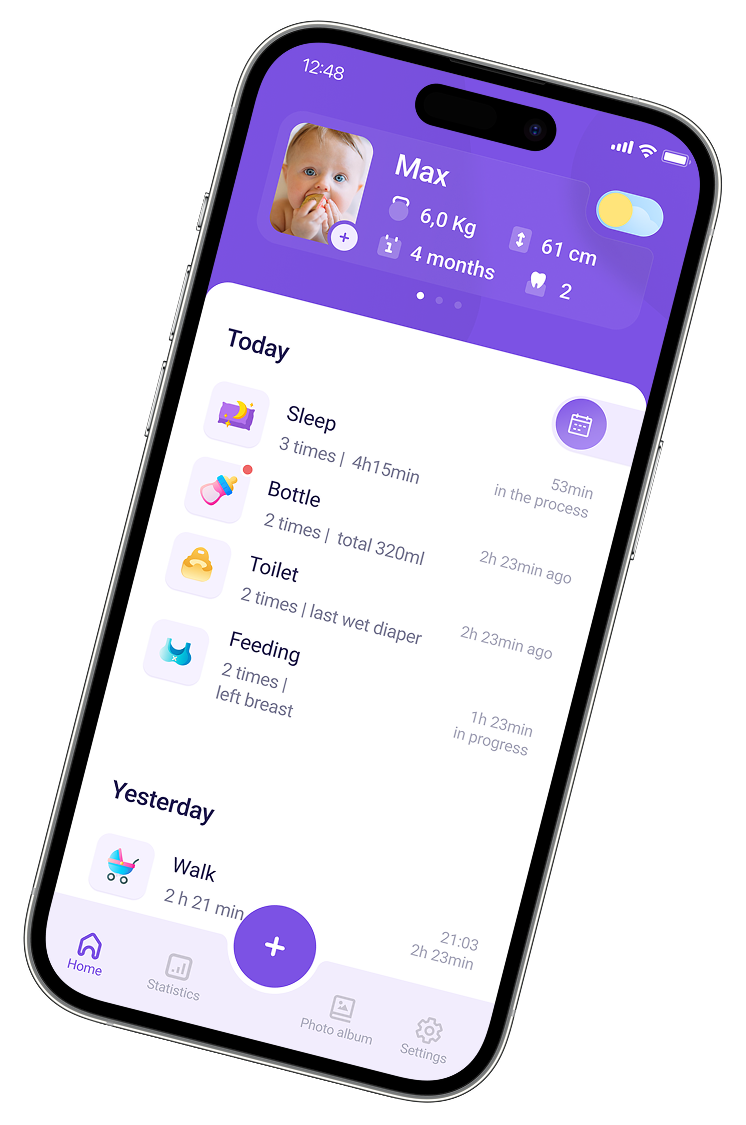
There's a lot to remember when introducing first foods — which foods you've tried, which allergens are in, and how your baby reacted. With Momzy, you can log meals and new foods, note any reactions to allergens, and track your baby's growth on charts with WHO references — all in one place to share with your pediatrician. Shared family access keeps your partner and grandparents on the same page about what's been introduced.
Download Momzy free on the App Store, Google Play, or AppGallery and make starting solids calmer and more organized.
Key takeaways -
Start solids around 6 months, when your baby shows readiness signs.
-
Prioritize iron-rich first foods, and offer a variety of vegetables, fruits, grains, and protein.
-
Introduce one food at a time, smooth or soft textures first, with no added salt or sugar.
-
Introduce allergens early and one at a time; avoid honey, choking hazards, and whole cow's milk as a drink before 12 months.
-
Milk remains the main nutrition in the early months — solids are added alongside it.