If you've ever stared at a half-full bottle wondering, "How much milk should I be pumping?", you're far from alone. Pumping output is one of the most common sources of worry for breastfeeding parents — yet "normal" covers a surprisingly wide range. This guide explains typical pumping output norms by stage, what affects how much you express, and why the number in the bottle isn't the full story.
This article is for general information and isn't a substitute for advice from your doctor or a lactation consultant. If you're worried about your milk supply or your baby's weight gain, reach out to a professional.
How much milk should I be pumping?
For a parent with an established milk supply who is breastfeeding and pumping, a typical session yields about 2 to 4 ounces (60–120 ml) total (combining both breasts). But this varies enormously depending on timing, your body, and your stage of breastfeeding.
In the first few days, you'll only express drops to a few milliliters of colostrum — and that's completely normal. Your milk "comes in" around days 3–5, and output increases over the following weeks as supply regulates.
A key point upfront: how much you pump is not a reliable measure of how much milk you make. A baby with a good latch is almost always more efficient at removing milk than a pump.
Typical pumping output by stage
Use this as a rough guide, not a target to hit exactly. Every parent is different.
\
| Stage | Typical output per session |
|---|---|
| Days 1–3 (colostrum) | A few drops up to ~5 ml |
| Days 4–7 | Increasing, ~15–30 ml building up |
| 2+ weeks (established, alongside nursing) | ~60–120 ml (2–4 oz) total |
| Exclusive pumping (established) | ~750–1035 ml per day across sessions |
| One extra session between feeds | ~15–60 ml (0.5–2 oz) |
If you're pumping in addition to full breastfeeding, expect less per session — your baby has already taken much of the available milk.
How much milk does a baby actually need?
From about 1 to 6 months, an exclusively breastfed baby drinks roughly 25–35 oz (750–1035 ml) per day. Per feeding, that's often 2–4 oz (60–120 ml) — which is why a single "normal" pumping session often lines up with about one feed. Unlike formula, breast milk intake stays fairly steady across this period rather than constantly increasing.
What affects your pumping output
Many factors influence how much you express — most have nothing to do with your actual supply:
-
Time of day — output is usually highest in the morning.
-
Time since last feed/pump — a fuller breast yields more.
-
Pump quality and flange fit — a poorly fitting flange dramatically reduces output.
-
Let-down — stress and distraction can delay it; relaxation helps.
-
Whether you nurse too — pumping after nursing yields less.
-
Hydration, rest, and frequency — frequent removal supports supply.
Pumping while breastfeeding vs. exclusive pumping
\ -
Pumping alongside nursing: Expect smaller amounts, especially right after a feed. Pumping between feeds or in the morning usually gives more.
-
Exclusive pumping: Aim to match your baby's daily needs (~25–35 oz) spread across 8 sessions early on, gradually dropping to fewer as supply establishes. Total daily volume matters more than any single session.
How to increase your pumping output
If you'd like to express more, try: -
Pump more often — supply responds to frequent, thorough removal.
-
Ensure correct flange size — this is the most overlooked fix.
-
Try "power pumping" — mimic cluster feeding (e.g., pump 20 min, rest 10, pump 10, rest 10, pump 10) once a day.
-
Massage and use breast compressions while pumping.
-
Relax — look at a photo of your baby, breathe, get comfortable.
-
Empty fully and pump a few minutes past the last drops to signal more demand.
-
Stay hydrated and rested, and eat enough.
Remember: the pump isn't the whole story
It's worth repeating: a low pumping output does not mean low supply. Many parents who pump very little still fully nourish their babies at the breast. The most reliable signs your baby is getting enough are: -
6+ wet diapers a day;
-
steady weight gain;
-
a content, satisfied baby after feeds.
Don't let the bottle undermine your confidence.
When to talk to a lactation consultant
Reach out to a lactation consultant or your doctor if: -
your baby isn't gaining weight or has fewer than 6 wet diapers a day;
-
your output suddenly drops significantly;
-
pumping is painful or your flange never feels right;
-
you're exclusively pumping and struggling to meet your baby's daily volume;
-
you simply feel unsure — professional support makes a real difference.
Track your pumping with Momzy
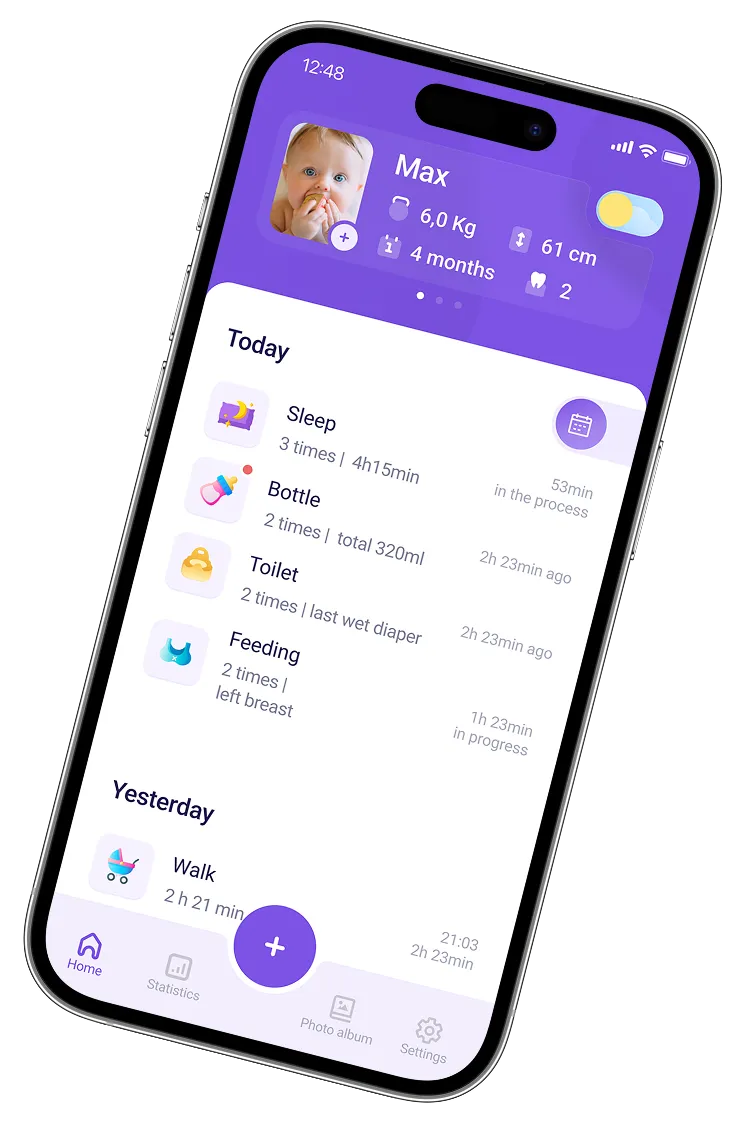
When you're juggling nursing, pumping, and bottles, it's hard to remember how much you pumped and when. With Momzy, you can log each pumping session and volume, track totals over the day, note which breast and how long, and keep an eye on your baby's intake and growth on WHO-based charts — all in one place to share with your lactation consultant. Shared family access keeps your partner in the loop for bottle feeds, too.
Download Momzy free on the App Store, Google Play, or AppGallery and take the guesswork out of pumping.
Key takeaways: -
An established session (alongside nursing) typically yields 2–4 oz (60–120 ml) total — but normal varies widely.
-
In the first days you'll only get drops of colostrum — that's expected.
-
A baby needs about 25–35 oz (750–1035 ml) per day, roughly 2–4 oz per feed.
-
Pumping output is not a measure of your supply — judge supply by wet diapers and weight gain.
-
To pump more, fix flange fit, pump more often, try power pumping, and relax.