If you're running on broken sleep and wondering whether your baby will ever settle into a rhythm, you're not alone. A newborn sleep schedule in the early weeks looks nothing like the tidy routines you may have imagined — and that's completely normal. This complete guide explains how much newborns sleep, why their days and nights are scrambled at first, and how a gentle, age-appropriate schedule slowly takes shape over the first three months.
This article is for general information and is not a substitute for professional medical advice. Every baby is different. Always follow safe-sleep guidance and discuss any concerns about feeding, weight gain, or sleep with your pediatrician.
How much do newborns sleep?
Newborns sleep a lot — but in short bursts around the clock. Most babies sleep 14–17 hours per day in the first weeks, spread across both day and night in chunks of 2–4 hours at a time.
Why so fragmented? A newborn's tiny stomach empties quickly, so they wake often to feed. They also haven't yet developed a circadian rhythm — the internal body clock that tells us when it's day and night. That's why a 2-week-old can be wide awake at 3 a.m. and sound asleep at noon.
The good news: this stage is temporary. By around 3 months, most babies start consolidating more sleep into the night.
Newborn sleep by age: what to expect
Here's a general overview of how sleep changes over the first three months. Think of these as typical ranges, not strict targets.
| Age | Total sleep (24h) | Night sleep | Daytime naps | Wake window |
|---|---|---|---|---|
| 0–4 weeks | 14–17 hours | 8–9 hours (broken) | 7–9 hours over 4–6 naps | 30–60 min |
| 1–2 months | 14–16 hours | 8–10 hours (longer stretches) | 6–7 hours over 3–5 naps | 60–90 min |
| 2–3 months | 14–16 hours | 9–11 hours | 4–5 hours over 3–4 naps | 75–120 min |
A wake window is how long your baby can comfortably stay awake between sleeps. Newborns have very short windows — often just 45–60 minutes — so a baby who's been up for an hour is usually ready to sleep again.
Why newborns mix up day and night
Many newborns are sleepiest during the day and most alert at night. Their circadian rhythm simply hasn't kicked in yet — it typically begins developing around 6–8 weeks. You can gently help it along:
- Make daytime bright and active. Open the curtains, keep normal household noise, and talk and play during awake times.
- Keep nights calm and dark. Use dim light for feeds and diaper changes, keep your voice low, and avoid stimulation.
- Expose your baby to morning daylight to help set their internal clock.
- Watch for sleepy cues rather than the clock in these early weeks.
A sample newborn daily rhythm
True schedules come later, but a loose eat–wake–sleep cycle can bring a little predictability. Around 6–10 weeks, many families find a rhythm like this:
| Time | Activity |
|---|---|
| 7:00 a.m. | Wake and feed |
| 7:45 a.m. | Short wake window (play, tummy time) |
| 8:30 a.m. | Nap 1 |
| Through the day | Repeat feed → awake → nap every 2–3 hours |
| 7:00 p.m. | Bedtime routine and feed |
| Overnight | Feed every 2–4 hours as needed |
Don't worry about hitting exact times. The goal is a gentle, repeating pattern — feed, a little awake time, then sleep before your baby gets overtired.
Reading your baby's sleepy cues
Catching sleep cues early helps you settle your baby before they become overtired (which paradoxically makes it harder to sleep). Watch for:
- yawning, rubbing eyes, or pulling at ears;
- staring off or losing interest in toys and faces;
- fussiness, frowning, or clenched fists;
- slower movements and red eyebrows.
When you see these signs, start winding down for a nap or bedtime.
Building a simple bedtime routine
Even newborns benefit from a short, predictable wind-down. A consistent routine signals that sleep is coming and becomes a powerful sleep association as your baby grows. Try a few calm steps in the same order each night:
- a warm bath or gentle wipe-down;
- fresh diaper and pajamas or sleep sack;
- a feed in a dim, quiet room;
- a short cuddle, lullaby, or quiet book;
- into the crib drowsy but awake when possible.
Keep it short (15–30 minutes) and repeat it nightly. Consistency matters far more than length.
Safe sleep basics
A newborn sleep schedule only works alongside safe-sleep practices. Follow the ABCs of safe sleep:
- Alone — baby sleeps on their own sleep surface, no bed-sharing.
- Back — always place baby on their back for every sleep.
- Crib — use a firm, flat mattress with a fitted sheet only.
Keep the crib free of pillows, blankets, bumpers, and soft toys. Room-share (baby in your room, on a separate surface) ideally for the first 6–12 months, keep the room at a comfortable temperature, and consider a pacifier at sleep times once feeding is established.
When will my baby sleep through the night?
"Sleeping through the night" usually means a 5–6 hour stretch — not a full 12 hours. Many babies reach this around 3–6 months, though it varies widely and night feeds are still normal well into the first months. Newborns need to wake to feed for healthy growth, so don't rush to cut night feeds before your pediatrician says it's fine.
When to talk to your pediatrician
Reach out if your baby:
- is extremely difficult to wake for feeds or consistently sleeps through feedings in the early weeks;
- isn't gaining weight as expected;
- has very labored or noisy breathing during sleep;
- seems unusually irritable and cannot be settled;
- you simply feel something is off — always trust your instincts.
How Momzy helps you track newborn sleep
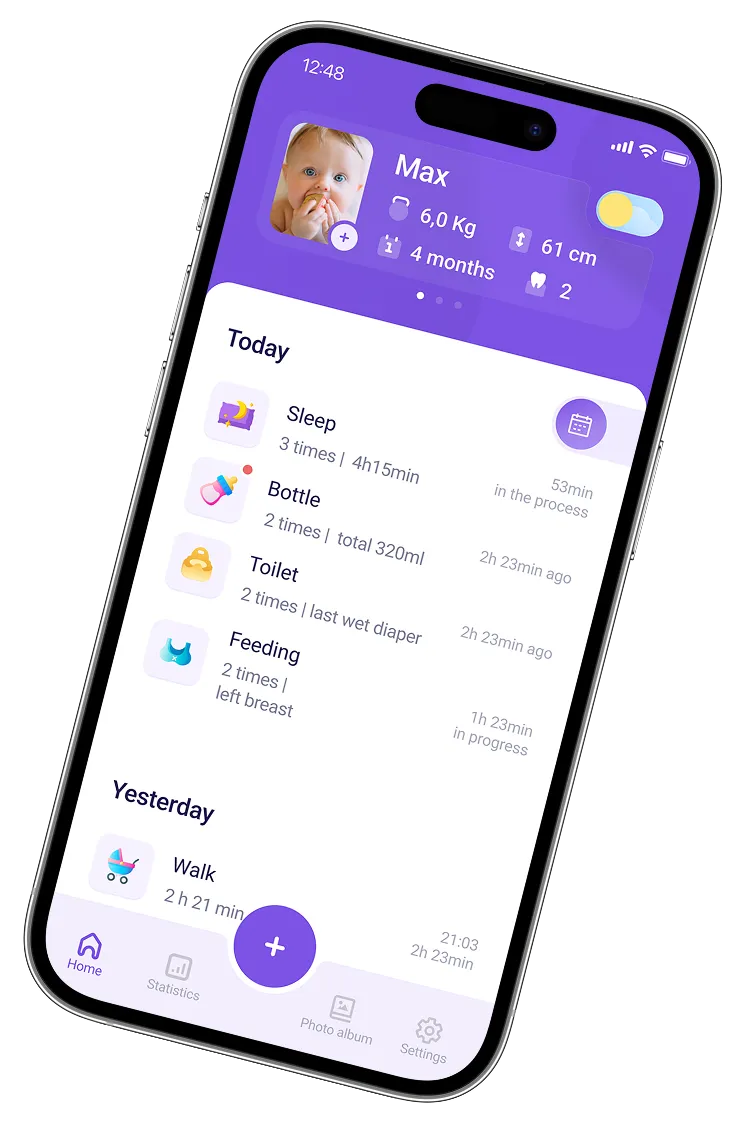
In the blur of newborn days, it's hard to remember when your baby last slept or fed. With Momzy, you can log sleep and naps with a tap, see patterns emerge over time, and track wake windows so you can catch that sweet spot before overtiredness sets in. Feeding and diaper logs live in the same place, and shared family access keeps your partner in sync — so whoever's on duty always knows what's next.
Download Momzy free on the App Store, Google Play, or AppGallery and bring a little calm to those early weeks.
Key takeaways
- Newborns sleep 14–17 hours a day in short 2–4 hour stretches around the clock.
- Day-night confusion is normal; a baby's circadian rhythm develops around 6–8 weeks.
- Use short wake windows and sleepy cues instead of a strict clock in the early weeks.
- A simple, consistent bedtime routine and safe-sleep ABCs lay the foundation for better sleep.
- Many babies sleep a longer 5–6 hour stretch around 3–6 months — night feeds before then are normal.