Few milestones bring as many sleepless nights as that first tooth. If your little one is suddenly drooling, chewing on everything, and fussier than usual, you may be wondering whether teething is to blame. This guide breaks down the most common teething symptoms, when to expect them, how to comfort your baby safely, and — importantly — which signs are not caused by teething and deserve a call to your pediatrician.
This article is for general information and is not a substitute for professional medical advice. If your baby has a high fever, diarrhea, or seems genuinely unwell, contact your pediatrician — these are not normal teething symptoms.
When does teething start?
Most babies get their first tooth between 4 and 7 months, though the range is wide. Some babies cut a tooth as early as 3 months, while others don't have one until after their first birthday — both can be perfectly normal.
Teeth usually arrive in a predictable order, starting with the bottom front teeth (lower central incisors), followed by the top front teeth. Symptoms often begin a few days before a tooth breaks through the gum and ease once it appears.
\
| Age | Teeth that typically emerge |
|---|---|
| 4–7 months | Lower central incisors (bottom front) |
| 8–12 months | Upper central incisors (top front) |
| 9–16 months | Lateral incisors (sides) |
| 13–19 months | First molars |
| 16–23 months | Canines |
| 23–33 months | Second molars |
By around age 3, most children have their full set of 20 baby teeth.
Common teething symptoms
Teething affects every baby differently. Some breeze through it, while others have a harder time. The most common teething symptoms include:
-
Excessive drooling — often the earliest sign, sometimes weeks before a tooth appears.
-
Chewing and biting on fingers, toys, and anything within reach.
-
Swollen, tender gums that may look red or have a small bump.
-
Irritability and fussiness, especially in the days before a tooth erupts.
-
Trouble sleeping and more frequent night waking.
-
Reduced appetite or fussiness during feeds (sucking can hurt sore gums).
-
A drool rash around the mouth, chin, or chest from constant wetness.
-
Rubbing the cheeks or pulling at the ears on the same side as an emerging tooth.
Symptoms tend to come and go as each new tooth pushes through, then settle until the next one starts.
What teething does NOT cause
This is one of the most important things for parents to know. Teething is often blamed for symptoms it doesn't actually cause. Teething does not cause: -
High fever (above 100.4°F / 38°C) — teething may cause a slight rise in temperature at most;
-
Diarrhea or significant vomiting;
-
A runny nose, cough, or congestion;
-
Rashes anywhere other than around the mouth/chin from drool.
Because teething overlaps with the age when babies lose the immunity passed on from mom and start exploring the world (hand-to-mouth), these symptoms usually signal a separate illness. If your baby has any of the above, don't assume it's teething — check with your pediatrician.
How to soothe a teething baby
Gentle pressure and something to chew on are usually the most effective comfort measures. Safe options include: -
A clean, cool washcloth for your baby to gnaw on.
-
A solid silicone teething ring, chilled in the fridge (never frozen solid, which is too hard).
-
Gentle gum massage with a clean finger.
-
Chilled (not frozen) soft foods for babies already on solids, such as a cold puree.
-
Wiping drool frequently and applying a barrier cream to prevent drool rash.
-
Extra cuddles and patience — comfort and routine go a long way.
For significant discomfort, your pediatrician may okay an age-appropriate pain reliever such as infant acetaminophen. Always confirm the correct dose for your baby's age and weight first.
Teething safety: what to avoid
Some popular remedies are not recommended by health authorities because of safety risks: -
Amber teething necklaces — a strangulation and choking hazard, with no proven benefit.
-
Teething tablets or gels containing benzocaine or belladonna — linked to serious side effects in infants.
-
Frozen-solid teethers or ice directly on gums — too hard and can damage tissue.
-
Anything small enough to be a choking hazard, including teethers that can break apart.
When in doubt, stick to a simple chilled washcloth or a one-piece silicone teether and ask your pediatrician about pain relief.
Caring for your baby's new teeth
Good oral care starts with that very first tooth: -
Wipe gums with a soft, damp cloth even before teeth appear.
-
Once a tooth comes in, brush twice a day with a soft infant toothbrush and a tiny smear (rice-grain size) of fluoride toothpaste.
-
Avoid sugary drinks and never put your baby to bed with a bottle, which can cause tooth decay.
-
Schedule a first dental visit by age 1 or within six months of the first tooth.
When to call your pediatrician
Reach out if your baby: -
has a fever over 100.4°F (38°C), diarrhea, or vomiting;
-
is inconsolable or seems to be in severe pain;
-
has swelling, bleeding, or pus around the gums;
-
shows no teeth at all by around 18 months;
-
has any symptom that worries you — trust your instincts.
How Momzy helps you track teething
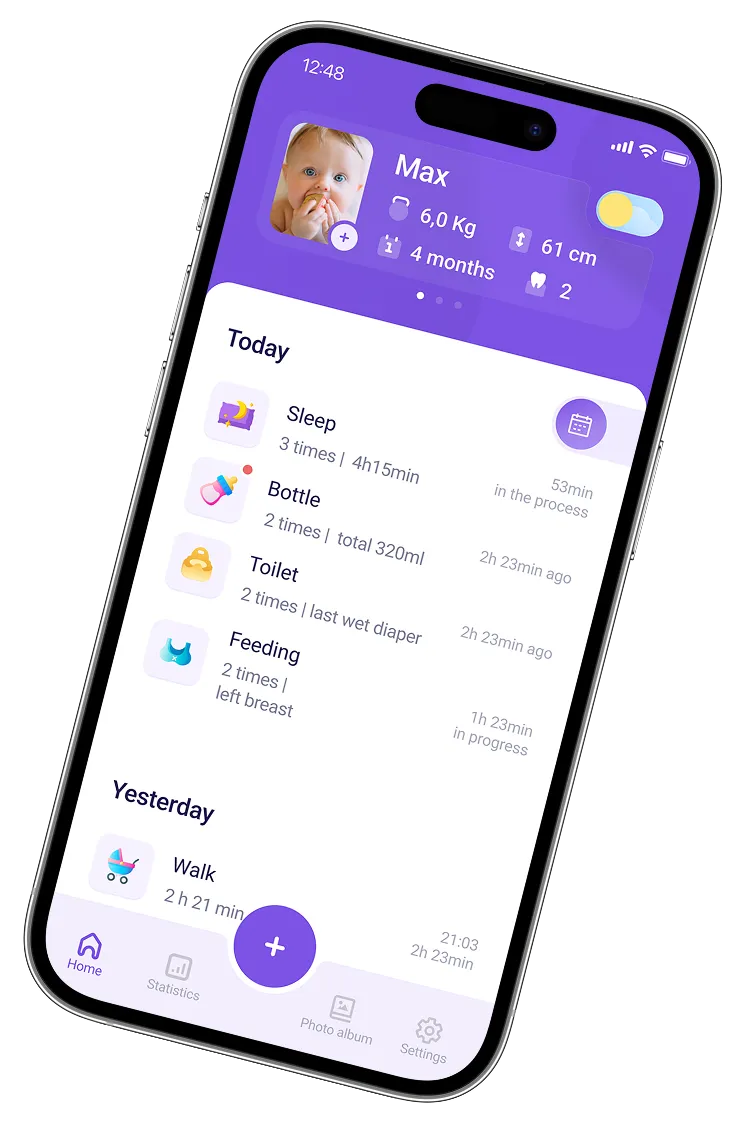
Teething comes in waves, and it's easy to lose track of which tooth is coming, when symptoms started, or what helped last time. With Momzy, you can log teething symptoms, note each new tooth as it appears, and keep a record of sleep, feeding, and fussiness right alongside it — so you can spot patterns and share a clear picture with your pediatrician. Shared family access means everyone caring for your baby knows what to expect, and gentle tracking helps you tell normal teething from something that needs a closer look.
Download Momzy free on the App Store, Google Play, or AppGallery and navigate teething with a little more confidence.
Key takeaways -
Most babies start teething between 4 and 7 months, beginning with the bottom front teeth.
-
Common teething symptoms include drooling, chewing, swollen gums, fussiness, and disrupted sleep.
-
Teething does not cause high fever, diarrhea, or a runny nose — these point to a separate illness.
-
Soothe with a chilled washcloth, a silicone teether, and gum massage; avoid amber necklaces and benzocaine gels.
-
Start oral care with the first tooth and call your pediatrician about high fever, severe pain, or any symptom that worries you.