Starting solids is one of the most exciting — and most debated — milestones of your baby’s first year. The big question most parents face is baby-led weaning vs purées: should you hand your baby soft finger foods and let them feed themselves, or start with smooth spoon-fed purées? The honest answer is that both work, and most families end up using a mix of the two.
This guide breaks down what each approach actually is, how they compare on safety and nutrition, the real pros and cons, and how to combine them without stress — so you can choose the path that fits your baby and your family.
What is baby-led weaning?
Baby-led weaning (BLW) means skipping spoon-fed purées and offering your baby soft, appropriately sized whole foods that they pick up and eat themselves. Instead of you controlling the spoon, your baby explores food at their own pace — squishing, gnawing, and learning textures from the very first meal.
Typical first finger foods include soft-steamed vegetable sticks, ripe banana or avocado spears, and strips of soft toast. The idea is to let babies join family meals and self-regulate how much they eat.
What is purée (spoon) feeding?
Purée feeding — sometimes called traditional or spoon-led weaning — starts with smooth, blended foods that you feed to your baby with a spoon. Families usually begin with single-ingredient purées (carrot, sweet potato, apple, pear) and gradually move to thicker, lumpier textures and then to soft finger foods over the following weeks and months.
This is the approach many grandparents recognise, and it gives caregivers more direct control over how much a baby eats at each meal.
Baby-led weaning vs purées: side-by-side comparison
Here is how the two approaches compare across the factors parents ask about most.
| Factor | Baby-led weaning | Purée/spoon feeding |
|---|---|---|
| Who controls the food | Baby self-feeds | Caregiver feeds by spoon |
| Best start age | Around 6 months, once sitting up | 4–6 months (smooth) then progress |
| Textures | Whole soft foods from the start | Smooth → lumpy → finger foods |
| Mess level | High (part of the learning) | Lower, more contained |
| Portion control | Baby self-regulates | Caregiver can track amounts |
| Family meals | Easy — baby eats what you eat | Often separate meals at first |
| Learning curve | Chewing, grasping, self-feeding early | Swallowing first, chewing later |
Pros and cons of baby-led weaning
Benefits
- Encourages early chewing, hand-eye coordination and fine motor skills.
- Baby explores a wide range of textures and flavours from day one.
- Supports appetite self-regulation, since the baby decides how much to eat.
- Fits naturally into family mealtimes — less separate cooking.
Things to watch
- It is messy, especially in the early weeks.
- Harder to know exactly how much your baby actually ate.
- Can feel nerve-wracking for parents worried about gagging (more on that below).
Pros and cons of purées
Benefits
- Easier to see and track how much your baby is eating.
- Gentle, gradual introduction to eating for cautious families.
- Less mess and often quicker to clean up.
- Convenient for feeding on the go with pouches or jars.
Things to watch
- Babies can get used to smooth textures and resist lumpier foods if you wait too long.
- More separate meal prep and spoon-feeding time.
- Less early practice with self-feeding and chewing.
Is baby-led weaning safe? Gagging vs choking
Safety is the number-one worry parents raise about baby-led weaning — and the key is understanding the difference between gagging and choking.
Important: Gagging is a normal, protective reflex that pushes food forward and away from the airway. It can look dramatic (red face, coughing, watery eyes) but the baby is handling it. Choking is silent or high-pitched, with no effective cough — and needs immediate help.
Research comparing the two approaches has not found that baby-led weaning increases the risk of choking when foods are prepared safely. Both methods are considered safe when parents follow the same basic rules:
- Always seat your baby upright and never leave them alone while eating.
- Offer soft foods that squash easily between your finger and thumb.
- Avoid choking hazards: whole grapes, nuts, popcorn, hard raw vegetables, and chunks of hard fruit.
- Learn infant first aid for choking before you start solids — this is worth doing whichever method you choose.
Nutrition: does one method feed babies better?
For most healthy, full-term babies, both approaches can provide balanced nutrition. What matters more than the method is offering a variety of foods and, crucially, iron-rich options — because a baby’s iron stores start running low around six months.
With baby-led weaning, offer iron-rich finger foods such as soft-cooked meat strips, well-cooked lentils pressed into patties, or iron-fortified foods. With purées, blend in iron-rich ingredients and progress to lumpier textures on time so chewing skills keep developing. Until around 12 months, breast milk or formula remains the main source of nutrition, and solids are complementary.
The middle path: combining baby-led weaning and purées
Here is the part most rigid guides leave out: you do not have to choose one method forever. A combined or “responsive” approach is not only allowed — it is what many families and dietitians find works best in real life.
- Offer soft finger foods your baby can self-feed at one meal, and a spoon-fed purée at another.
- Load a spoon with purée and let your baby grab it (self-feeding, with less mess than fingers).
- Serve purée alongside finger foods so your baby dips, explores, and still gets a reliable intake.
Reassurance: A mixed approach gives you the developmental benefits of self-feeding and the reassurance of knowing your baby got a solid meal. There is no prize for purity — feeding your baby is not a test.
How to know your baby is ready to start solids
Whichever method you lean toward, wait for these signs of readiness — usually around six months:
- Your baby can sit up with little or no support and hold their head steady.
- They have lost the tongue-thrust reflex (no longer pushing food straight back out).
- They show interest in food — watching you eat, reaching, opening their mouth.
- They can bring objects (and hands) to their mouth with reasonable aim.
Great first foods for either approach
| For baby-led weaning (finger foods) | For purées (blended) |
|---|---|
| Soft-steamed broccoli or carrot sticks | Puréed carrot or sweet potato |
| Ripe banana or avocado spears | Apple or pear purée |
| Strips of soft toast or omelette | Blended peas or green beans |
| Soft-cooked pasta pieces | Smooth oatmeal or baby rice |
| Soft-cooked meat or lentil patties | Blended lentils or well-cooked meat |
Track the journey with Momzy
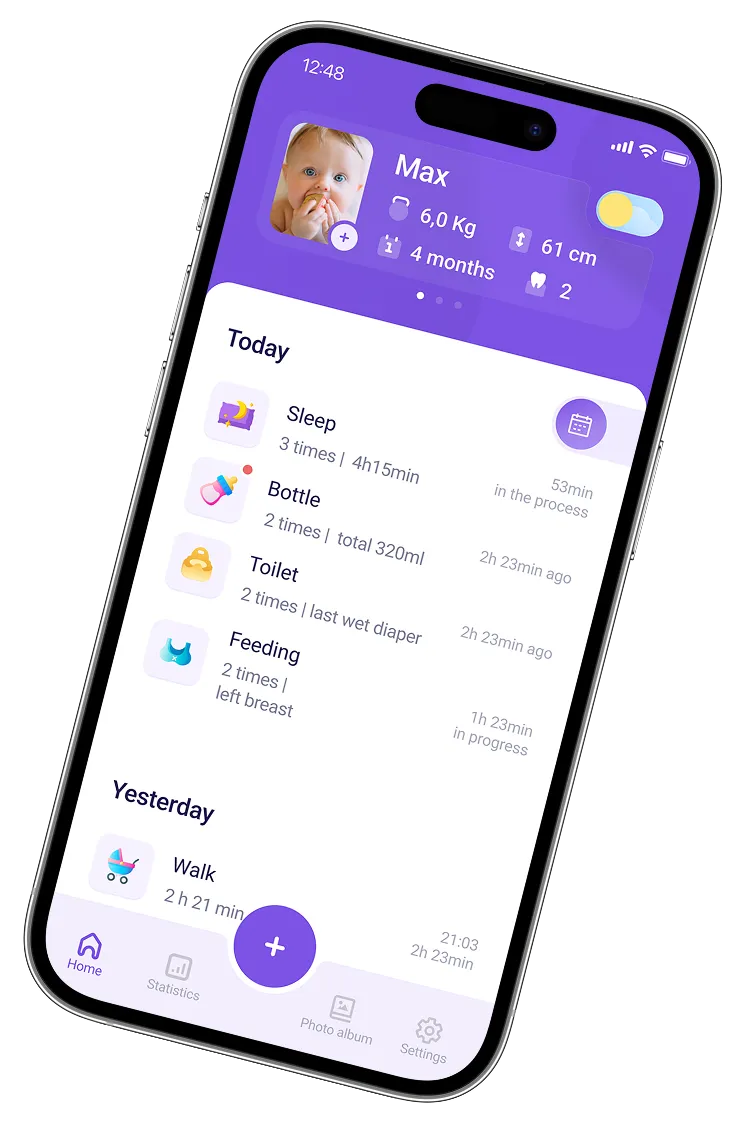
Whether you choose baby-led weaning, purées, or a mix of both, starting solids brings a wave of new firsts — new foods, new textures, new reactions. Momzy lets you log meals, note new foods and possible allergens, and keep an eye on feeding, sleep and growth all in one place. Seeing the pattern over days and weeks takes the guesswork out of “is my baby eating enough?” and helps you spot what works for your little one.
Tip: New to solids? Use Momzy to log each new food and watch your baby’s eating journey unfold — one calm meal at a time.
The bottom line
In the baby-led weaning vs purées debate, there is no single winner. Baby-led weaning builds early self-feeding and chewing skills; purées offer control and a gentle start. Both are safe and nutritious when you follow the basics, and combining them is a perfectly valid — often ideal — choice. Follow your baby’s cues, keep mealtimes relaxed, and remember: the goal is a happy, confident eater, not a perfect method.
FAQ
Can I do baby-led weaning and purées at the same time?
Yes. Many families combine the two — offering finger foods at some meals and spoon-fed purées at others, or serving them together. A mixed approach is safe and gives you the benefits of both.
Is baby-led weaning safe for the risk of choking?
When foods are prepared safely and your baby is seated upright and supervised, baby-led weaning is not shown to increase choking risk compared with purées. Learn the difference between gagging and choking, and avoid known choking hazards.
When should I start solids?
Most babies are ready around six months, when they can sit up with support, hold their head steady, have lost the tongue-thrust reflex, and show interest in food. Talk to your pediatrician about your baby’s individual timing.
Which method is better for nutrition?
Neither is clearly superior. What matters most is variety and iron-rich foods from around six months, while breast milk or formula stays the main source of nutrition until about 12 months.
What foods should I avoid when starting solids?
Avoid choking hazards such as whole grapes, nuts, popcorn, and hard raw vegetables, plus added salt, added sugar, and honey (before 12 months).